
Giving AI Access to the Right Information, Safely
- RAG (Retrieval-Augmented Generation) combines LLMs with your internal data. Instead of guessing, the model retrieves relevant documents or snippets and uses them to generate grounded answers.
- Embeddings & Vector Search turn text, documents, and other content into vectors (numeric representations) that enable semantic search — AI can find related content, not just exact keyword matches.
- AI Data Pipelines prepare, chunk, label, and index your content so assistants and agents can search it efficiently and respect permissions.
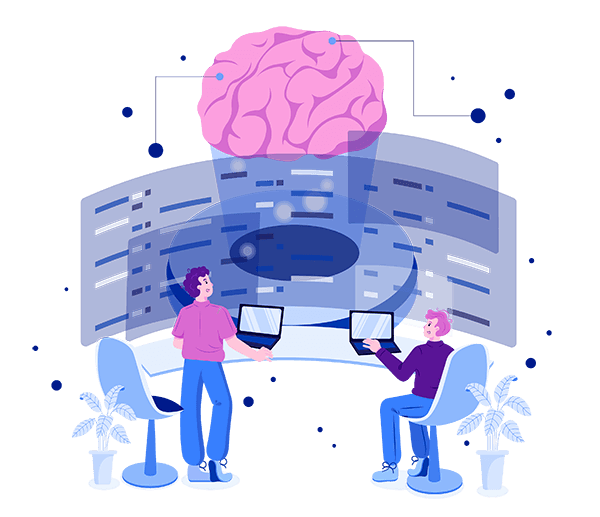
The Foundation for Accurate, Trustworthy AI
Without a strong data and retrieval layer:

- AI assistants hallucinate or give generic answers
- Sensitive content may be exposed incorrectly
- Users do not trust the outputs, and adoption stalls
By investing in AI Data, RAG & Vector Search, you:
- Increase answer accuracy and relevance
- Keep responses grounded in your official sources
- Enforce access controls and governance
- Reuse the same knowledge layer across multiple apps, agents, and teams
This becomes a reusable foundation for current and future AI use cases.
What Datasoft Delivers Under AI Data, RAG & Vector Search


We begin by understanding where your critical knowledge lives:
- Document repositories (SharePoint, file shares, Google Drive, etc.)
- Knowledge bases, wikis, intranets
- Ticketing and CRM notes
- Databases and line-of-business systems
We help you identify priority content domains (e.g., HR policies, product docs, SOPs, contracts) and define what should and should not be exposed to AI.


We design RAG architectures tailored to your environment:
- What content is in scope for the assistant or use case
- How content should be chunked, tagged, and versioned
- How retrieval will work (semantic search, filters, metadata)
- How to enforce access control and handle sensitive data
- How retrieved content is fed into prompts for the LLM
The result is a clear blueprint for building grounded AI assistants and knowledge tools.


We implement the core of semantic search:
- Choosing the right embedding models (hosted or open-source)
- Designing vector schemas, indexes, and metadata for your content
- Standing up a vector database or leveraging managed vector services
- Optimizing index refresh, upserts, and deletions for evolving content
This enables fast, relevant retrieval that understands meaning, not just keywords.


We build pipelines that keep your knowledge layer fresh:
- Extracting text from PDFs, Word, HTML, and other formats
- Cleaning, chunking, and annotating documents with metadata (e.g., type, owner, date, permissions)
- Automating ingestion and updates via scheduled jobs or event-based triggers
- Logging, error handling, and monitoring for ingestion jobs
These pipelines ensure AI responses are always based on current, properly processed data.


We refine search quality and trust over time:
- Human-in-the-loop evaluation of retrievals and answers
- Tuning chunk size, metadata filters, and ranking strategies
- A/B testing different embedding models or retrieval parameters
- Establishing feedback loops so users can rate or flag answers
This systematic evaluation helps you reach “good enough to trust” quality and maintain it as content evolves.
How We Architect RAG & Vector Search in Your Stack


- SharePoint, file shares, intranet, knowledge bases
- Databases and ticketing systems
- APIs to line-of-business applications
- Extractors and transformers for different file types
- Chunking, metadata enrichment, and cleaning
- Pipelines built using ETL/ELT tools or custom code
- Vector database (hosted or self-managed)
- Embedding models for text and possibly other modalities
- Metadata and filters for access control and relevance
- Retrieval logic and prompt construction
- Callouts to LLMs (hosted APIs or internal models)
- Business logic and guardrails
- Chat-style assistants and Q&A interfaces
- Application panels, widgets, or sidebars
- Application panels, widgets, or sidebars
Secure by Design: Permissions and Governance Built In
- Role- and attribute-based access control applied at retrieval time
- Filters on vector queries to ensure users only see what they are allowed to see
- Clear separation of embedding and content storage to support deletion and retention policies
- Encryption of data at rest and in transit, aligned with your security standards
- Logging and auditing of queries and retrieved documents for compliance and debugging
We align these elements with your broader Responsible AI & Governance framework to ensure safe, compliant usage.
Sample AI Data, RAG & Vector Search Projects
Internal Policy & SOP Assistant
- Need: Employees struggle to find the right policies and SOPs across many locations.
- Solution: RAG-based assistant that uses vector search over policy docs, SOPs, and FAQs, integrated into the intranet.
- Outcome: Faster, more accurate answers to “how do I…” questions, fewer emails to support teams.
Contract & Legal Document Intelligence
- Need: Legal and business teams need quick insight across large contract repositories.
- Solution: RAG solution that allows users to query contracts, find similar clauses, and summarize obligations, all within permission boundaries.
- Outcome: Faster reviews, better risk visibility, and reusable knowledge across deals.
Knowledge Layer for Support Agents
- Need: Support teams spend time searching multiple tools and wikis.
- Solution: Vector search and RAG integrated into the agent console, surfacing relevant knowledge articles and past cases automatically.
- Outcome: Reduced handle times, more consistent responses, and faster onboarding of new agents.
Developer & Engineering Knowledge Hub
- Need: Engineers frequently ask about internal APIs, systems, and architecture docs.
- Solution: AI assistant that indexes internal design docs, runbooks, and API references, enabling semantic search and Q&A.
- Outcome: Faster troubleshooting, fewer repeated questions, and better reuse of existing documentation.
How We Deliver AI Data, RAG & Vector Search


- Identify priority content domains and user groups
- Clarify security and governance constraints
- Define initial use cases and success criteria


- Map content sources and ingestion approach
- Choose vector store, embedding models, and RAG pattern
- Design access control and governance model
- Build ingestion pipelines for a focused content set
- Implement vector search, RAG orchestration, and a simple UI or API
- Test with a pilot group and collect feedback


- Extend coverage to more content sets and teams
- Harden ingestion, monitoring, and security
- Integrate RAG capabilities into more applications and agents
Part of a Unified AI & Software Stack
AI Data, RAG & Vector Search is a shared foundation that supports multiple services:

[AI Strategy & Consulting]
Identifies which knowledge domains and use cases should be prioritized.

[AI Development & Integration]
Builds applications, APIs, and UX around the RAG and vector search capabilities.

[Intelligent Automation & AI Agents]
Uses the knowledge layer to power agents that act, not just answer questions.
Software & IT Services
Provide the ongoing development, QA, cloud, and managed services needed to operate the platform.
This ensures you are building one coherent AI knowledge layer, not a collection of disconnected pilots.



Why Work with Datasoft Global?


We combine data engineering, analytics, and AI (RAG, embeddings, LLMs) with strong software engineering and integration skills.


Our solutions are designed for scale, security, and maintainability — not just demos.
We understand the importance of access control, auditability, and compliance in enterprise environments.
With leadership in the US and an offshore development center in India, we offer flexible, cost-effective engagement models.
We design your knowledge layer to be reusable across multiple assistants, agents, and applications as your AI footprint grows.